
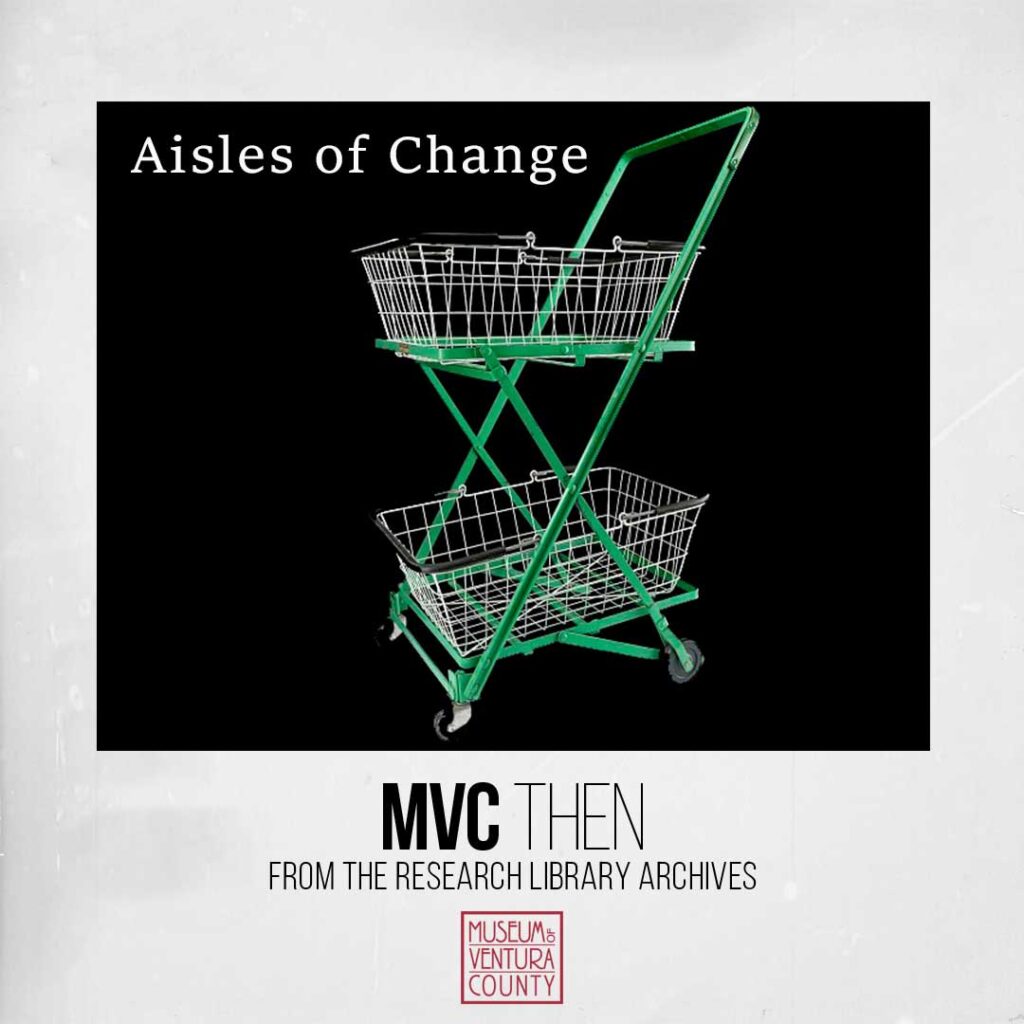
Aisles of Change: From Counters to Carts

Historical image illustrating the evolution of grocery shopping in Ventura

by Library Docent Volunteer Andy Ludlum

One evening in 1937, grocer Sylvan Goldman noticed a problem. Shoppers, often women with children, struggled to carry heavy baskets under their arms. Once the baskets got too full, they stopped buying. Looking around his office, Goldman spotted a folding chair and had an idea. With help from an employee, he built a prototype: a folding frame on wheels with two baskets stacked where the seat would be. It was the first shopping cart.

While the cart didn’t catch on right away, it soon became a symbol of modern convenience and spread across the country. After World War II, carts helped attract customers to larger supermarkets, including those in Ventura County.

Read the Story: Museum of Ventura County
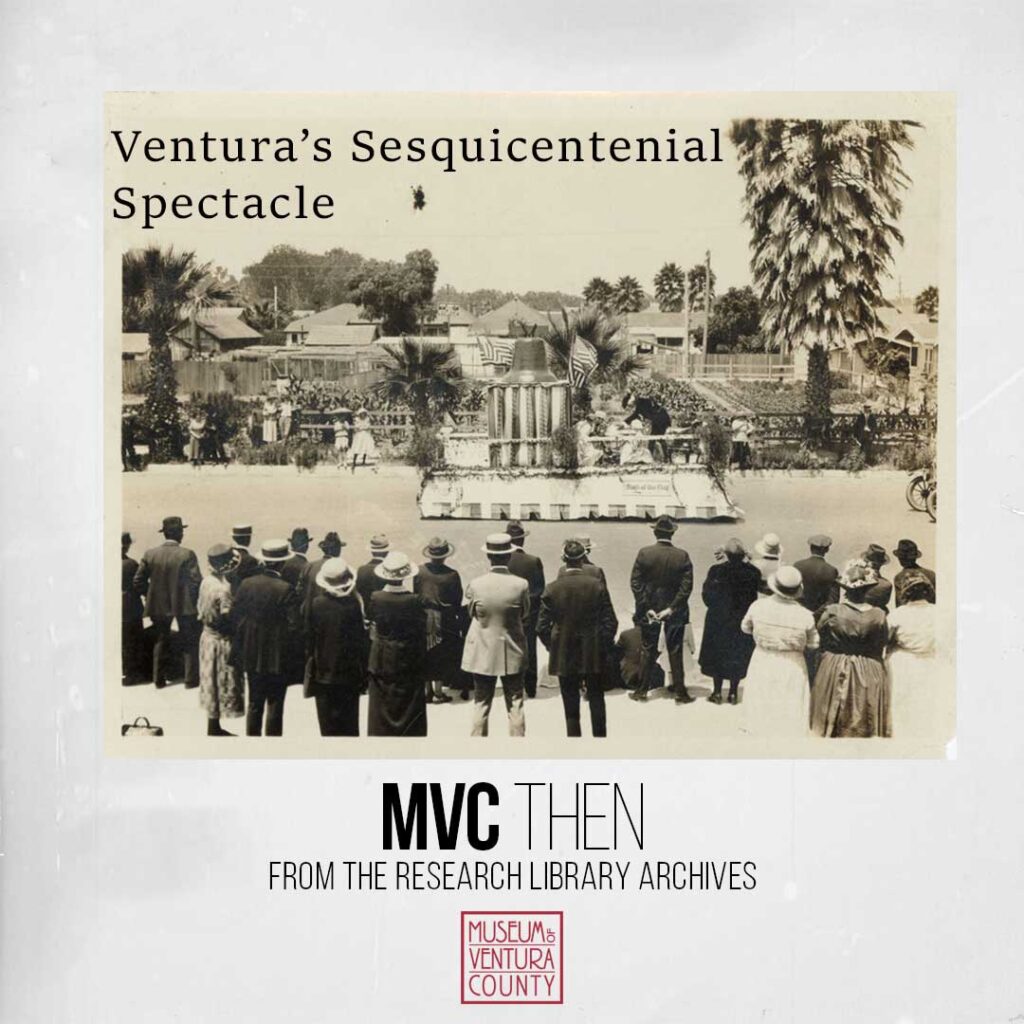
Ventura’s Sesquicentennial Spectacle

Historical image from Ventura's 150th-anniversary Sesquicentennial celebration

by Library Docent Volunteer Andy Ludlum

Moorpark had gone all out for Ventura’s massive 1926 Fourth of July parade. A Moorpark Enterprise columnist sat in an open touring car decorated with flags, bunting, and flowers. Two large signs in red, blue, and black lettering read: “California Apricot Exhibit,” “June 21–24,” and “Moorpark, the Home of the Apricot.” The columnist called the experience “astonishing and nearly unbelievable” and joked: “Never saw so many people before in all my life, and so many people never saw me before. Oft times I have done things to show myself off as a prune, they say, but Monday was the only time I have ever had the opportunity of trying to be an apricot.”

Ventura’s celebration marked the nation’s Sesquicentennial, the 150th anniversary of the Declaration of Independence. It was the largest and most dramatic patriotic event Ventura had ever staged and remains a landmark civic occasion to this day.

Read the Story: Museum of Ventura County
The Lions of Ventura County

by Library Docent Volunteer Andy Ludlum

It was a quiet June morning in 1926 when Joshua Stockton of South Mountain set out along the trail to his ranch. Just beyond a sharp bend, a shadow leaped from the chaparral and a mountain lion blocked his path. For a heart-stopping moment, man and beast stared each other down. The lion lunged, closing to just ten feet, its wild eyes fixed on Stockton. Most would have run but Stockton held his ground, slowly moving forward, refusing to give an inch.

Read the story: Museum of Ventura County

Chasing Marion: Ventura County’s Notorious Burglar

by Library Docent Volunteer Andy Ludlum

Juan Marion stood in the dark ocean, water up to his neck. The cold January waves made him gasp. The shock numbed the pain from the bullet that grazed his side and the handcuffs that cut into his wrists. He stayed still, watching as sheriff’s deputies swept the Santa Clara riverbed and the ocean with their flashlights, looking for him.

Read the story: Museum of Ventura County

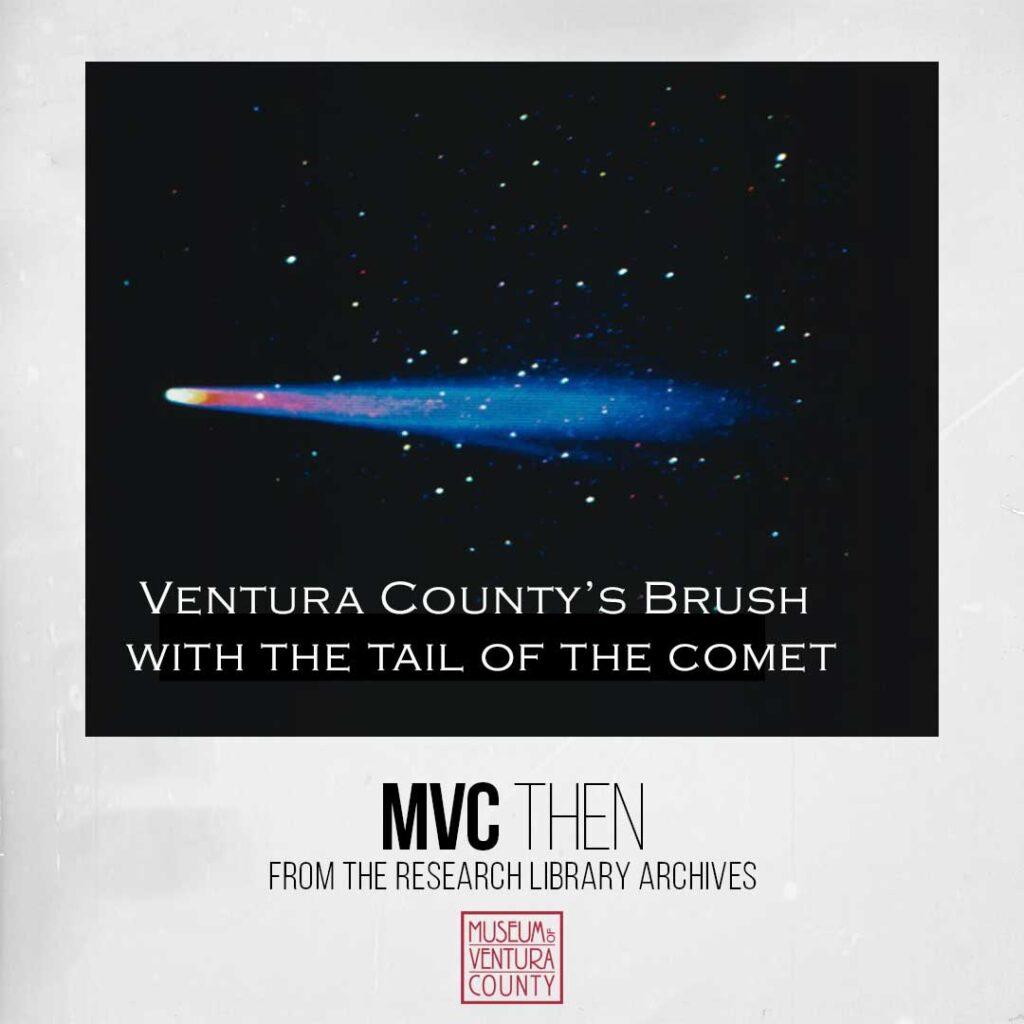
Ventura’s Brush with the Tail of the Comet

by Library Docent Volunteer Andy Ludlum

Even after 76 years, John Doughty’s memories as an 8-year-old in 1910 were as clear as if it were yesterday. The Simi Valley man said his mother, Annie, began crying and yelling when she first spotted Halley’s Comet. She fell to her knees and waved her arms up and down in prayer. She was certain the comet was a sign from God, “a cyclone that would burn a hole through the Earth.”

Read the story: Museum of Ventura County

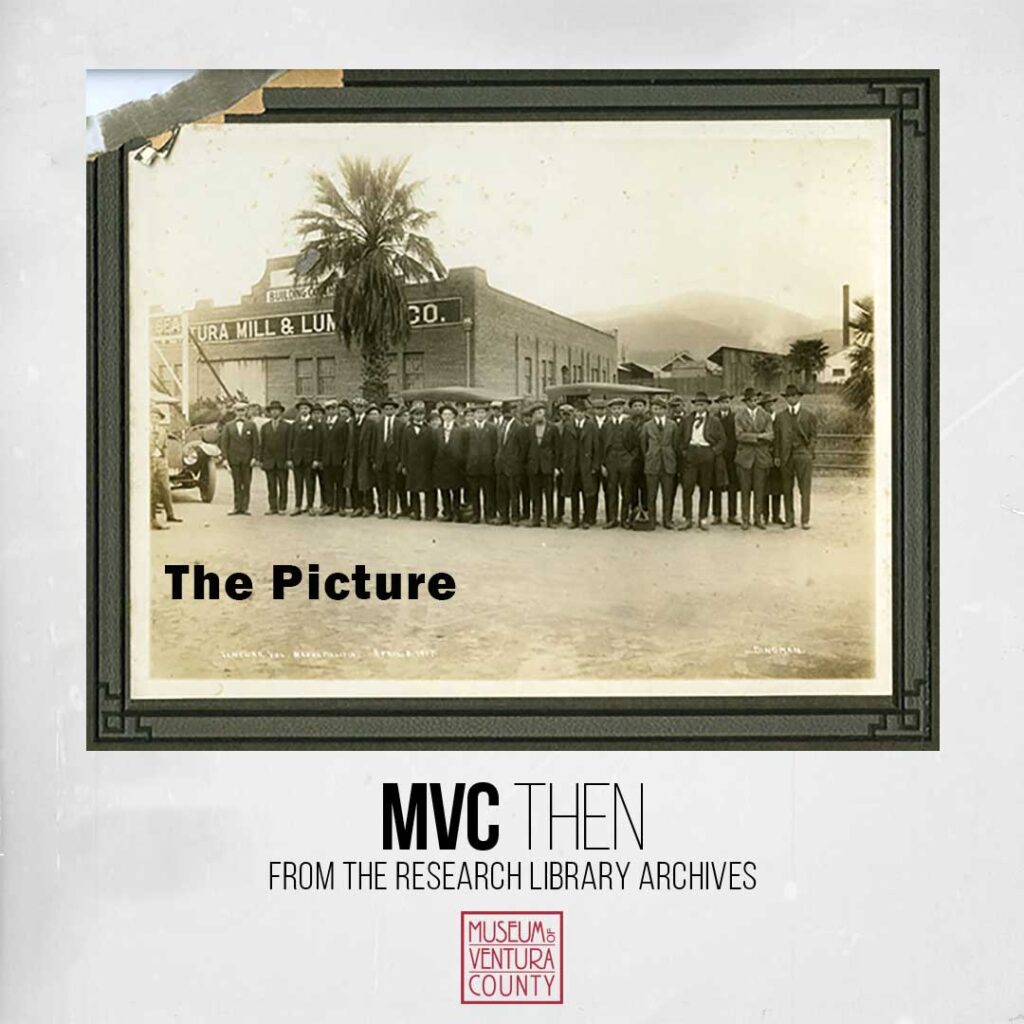
The Picture

by Library Docent Volunteer Andy Ludlum

At first glance, the picture is nothing special. It’s a group of 31 men, posed in front of the Ventura Mill & Lumber Company. They are all dressed in their best clothing, suits and hats, most wearing ties. What makes the picture historic is that it was taken on Easter Sunday, the morning of April 8, 1917, two days after the United States had declared war on Germany. The young Ventura men had all volunteered to serve their country as members of a state naval militia. Newspaperman, author, and curator of what would become the Museum of Ventura County, E. M. Sheridan wrote that the photograph finally told the “little sleepy mission town” that “there really was a war and their own land was into it.”

Read the story: Museum of Ventura County

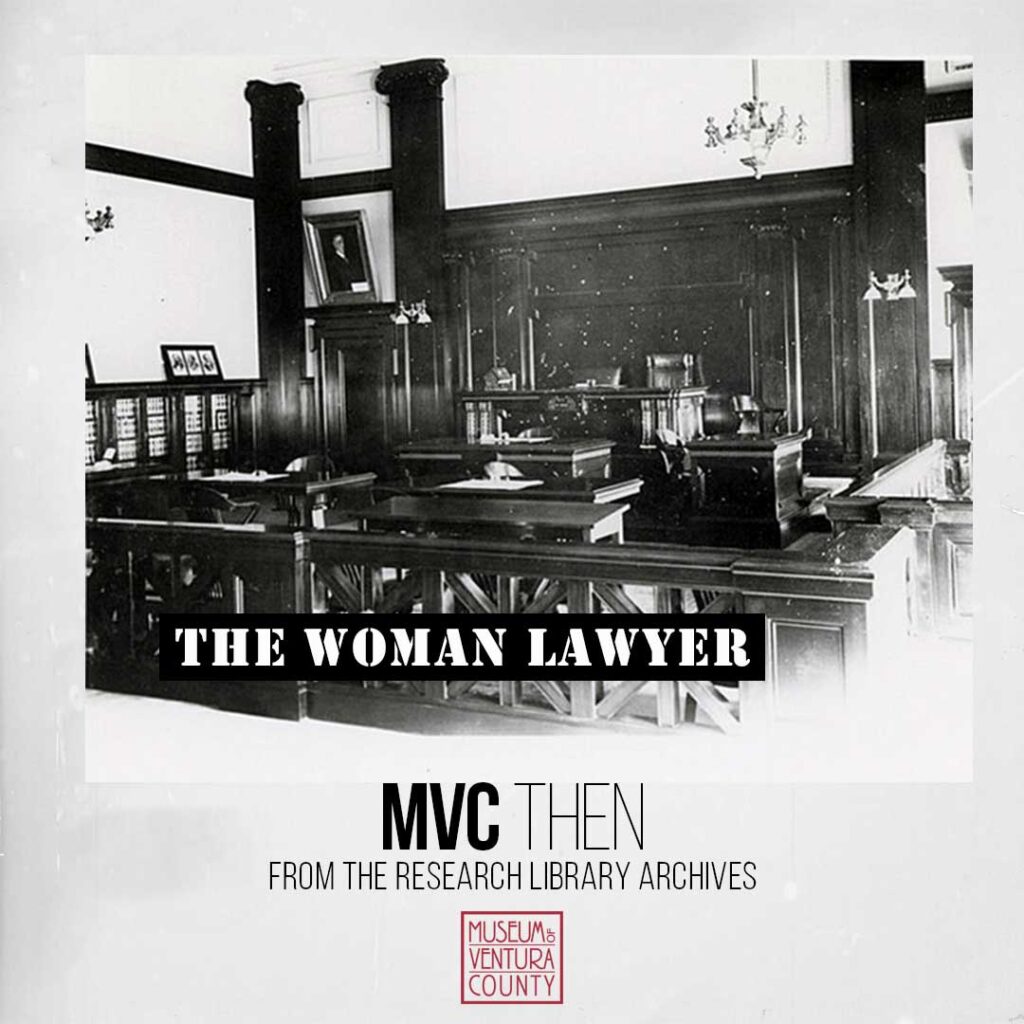
“The Woman Lawyer”

by Library Docent Volunteer Andy Ludlum

On July 28, 1924, when motions were called for in the case of the People vs. Jesse Mendoza in Ventura County Superior Court, court watchers were stunned when “a tall and stately woman” stepped inside the bar and answered, “ready for the defendant.” Mary Belle Spencer of Chicago became the first woman to represent a criminal defendant in Ventura County history. And this was no routine trial. It was the trial of man accused of committing one of the most gruesome and brutal murders anyone could remember. Spencer practiced law for decades and relished the attention she drew in legal circles. But despite her accomplishments and failures, she was invariably described in the newspapers as “the woman lawyer.”

Read the story: Museum of Ventura County

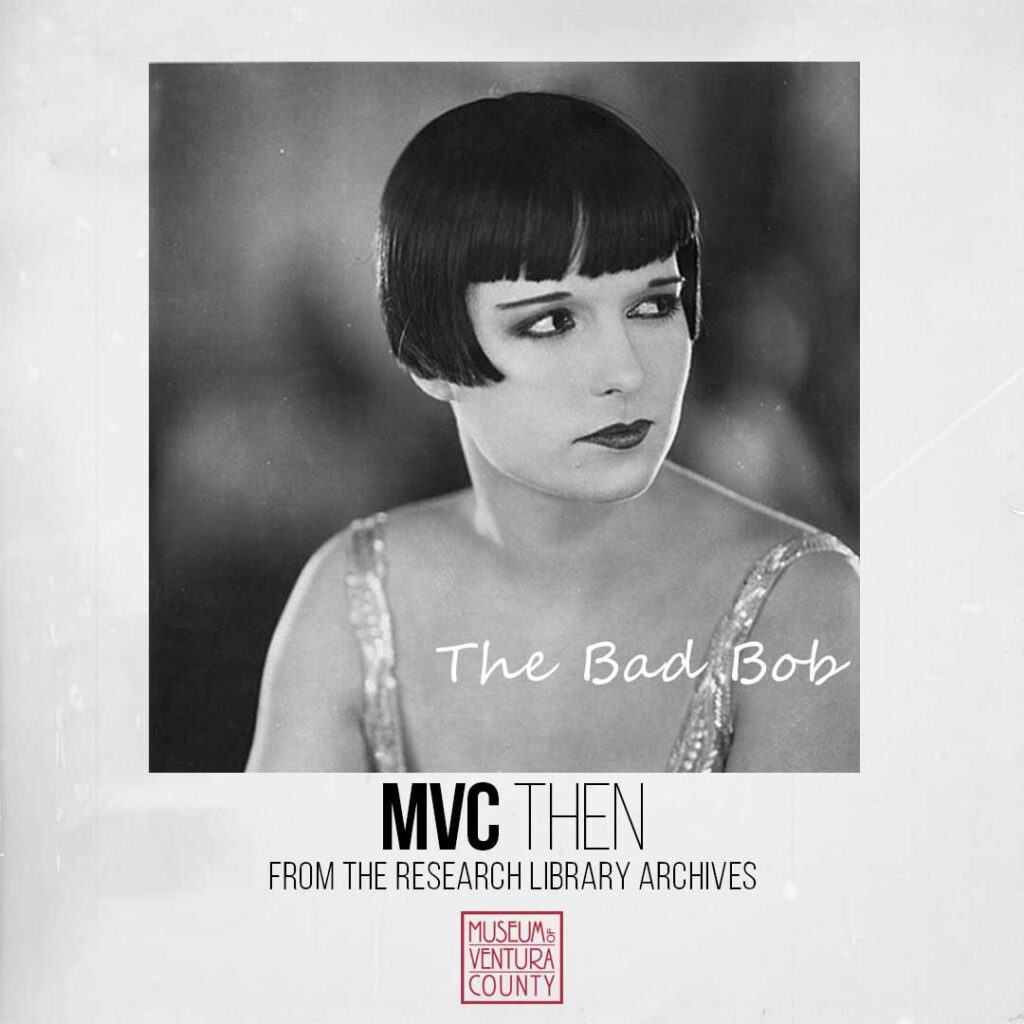
The Bad Bob

by Library Volunteer Andy Ludlum

Marjery Misner was described in 1924 by The Los Angeles Times as a “pretty, young teacher.”  Near the end of the term, the first-year elementary school teacher in Santa Paula was summoned to the South Grammar School office of the district superintendent, Charles D. Jones.  He said her actions two weeks earlier left him with no choice. She could no longer teach in Santa Paula, and he asked for her resignation. What had Misner done to prompt such an arbitrary reaction from Jones? She defied a school board edict – and bobbed her hair.

Read the story: Museum of Ventura County

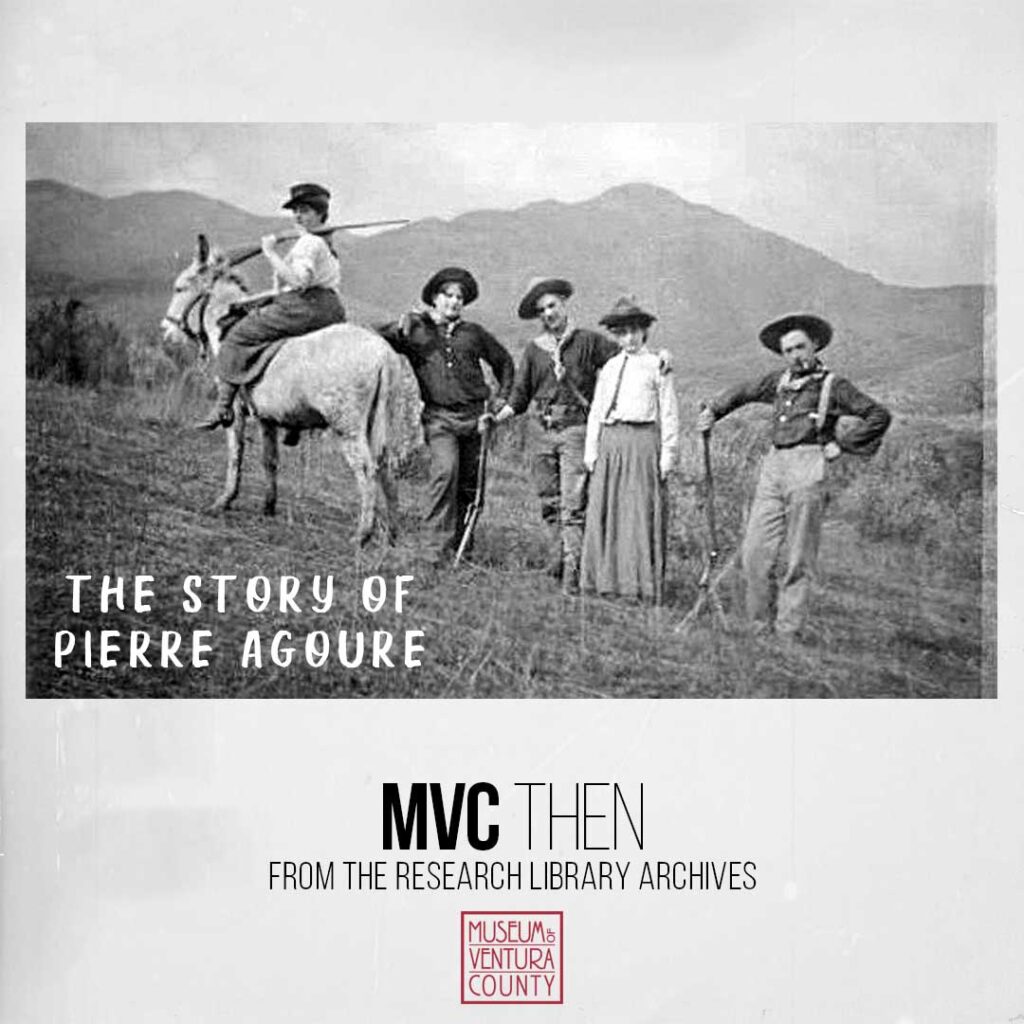
The Story of Pierre Agoure

By Library Volunteer Andy Ludlum

This is the story of an early Ventura County sheep rancher. His remarkable tale has been overlooked and almost lost over time.

Source: Museum of Ventura County

Stolen Liberty

By Library Volunteer Andy Ludlum

The Sunday, December 7, 1941 edition of the Oxnard Press Courier ran a banner headline “FIRST WAR EXTRA” and described the surprise Japanese attack on Pearl Harbor. Wartime hysteria and long-simmering racial prejudice would lead to 120,000 people of Japanese descent losing their homes, farms, jobs, and businesses as they were forced to spend the next several years in desolate concentration camps….

Source: Museum of Ventura County